Mokdo (Chundo · Camellia Island), Ulju, Ulsan
Memories of the “Mokdo Camellia Park” We Used to Visit for Cherry Blossoms
#UljuMokdo #MokdoEvergreenForest #NaturalMonument65 #Chundo #CamelliaIsland #BangdoRi #UlsanIslands #UljuAttractions #RestrictedAccess #NaturalHeritage
Hello, this is Hidori.
Today’s story feels heavier than usual—because it carries a spoonful of memory.
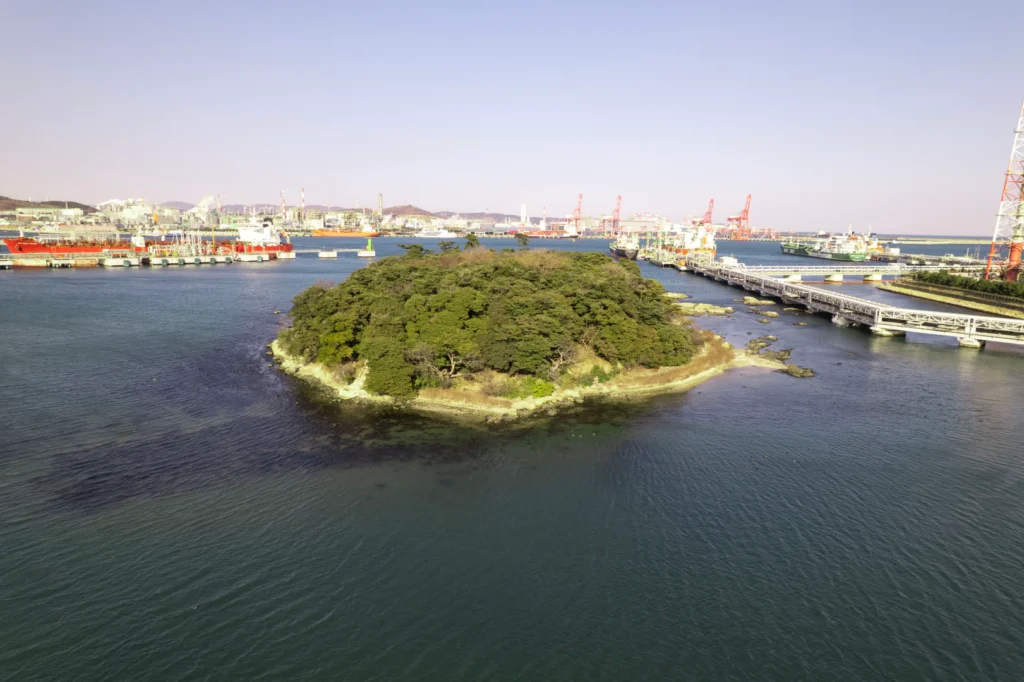
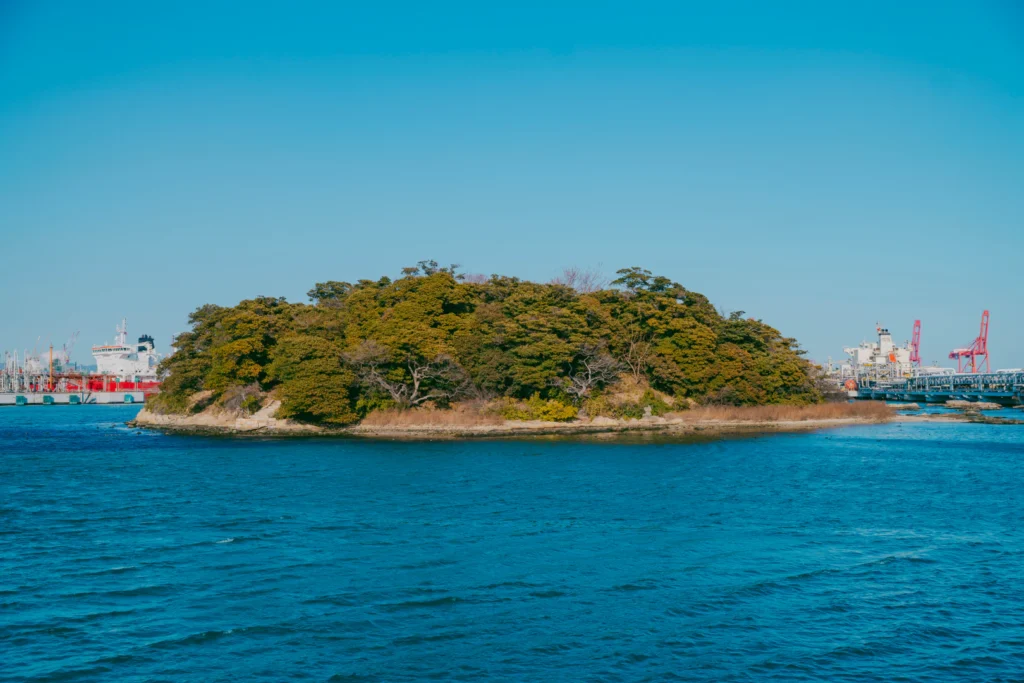
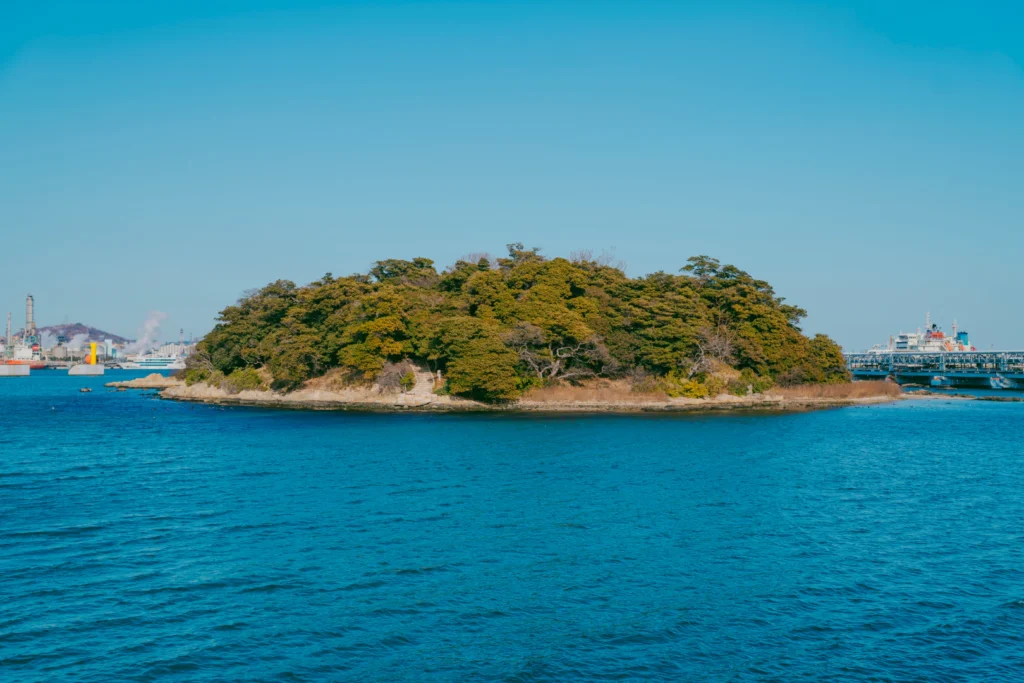
I want to share the story of Mokdo Island, a small island floating off the coast of Bangdo-ri, Onsan-eup, Ulju-gun.
When Mokdo Was a Spring Picnic Island
There’s an old photo captioned “Spring visitors heading to Mokdo Camellia Park to see cherry blossoms (1967)”.
Looking at it now, a thought naturally arises: “When will we ever be able to go again?”
These days, Mokdo is better known as a restricted island, but back then it was a beloved spring outing spot for Ulsan locals—people would hop on a boat, enjoy flowers, eat together, and return by evening.
Scenes like “heading to Mokdo Camellia Park for cherry blossoms” once felt completely ordinary.
One Island, Many Names
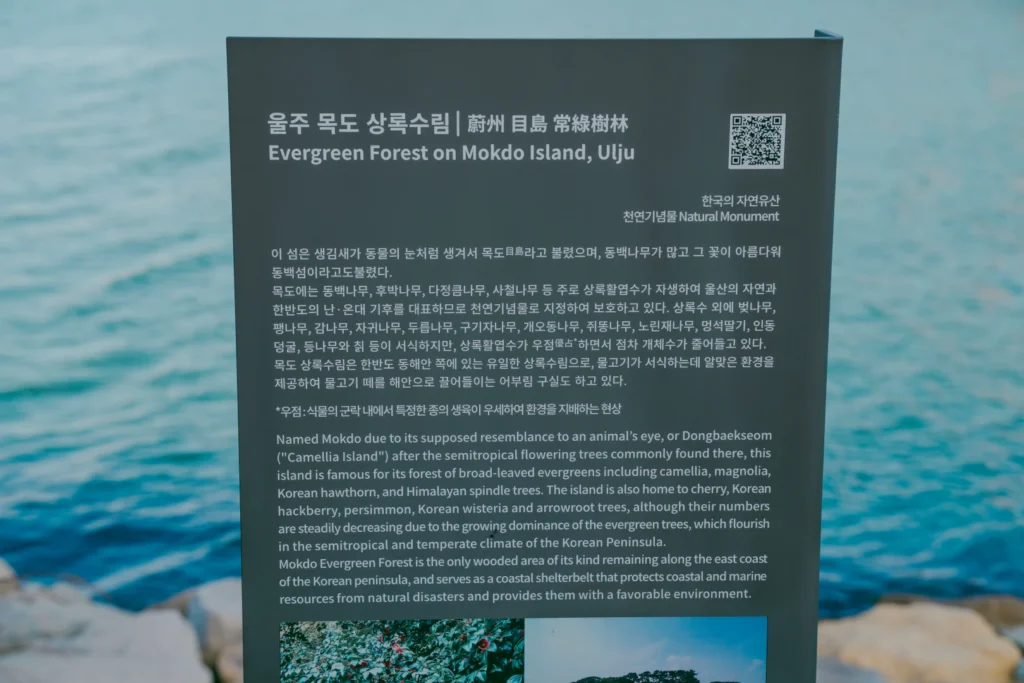
Mokdo has gone by several names over time—each tied to memory:
- Jukdo (Bamboo Island) — for its abundant bamboo
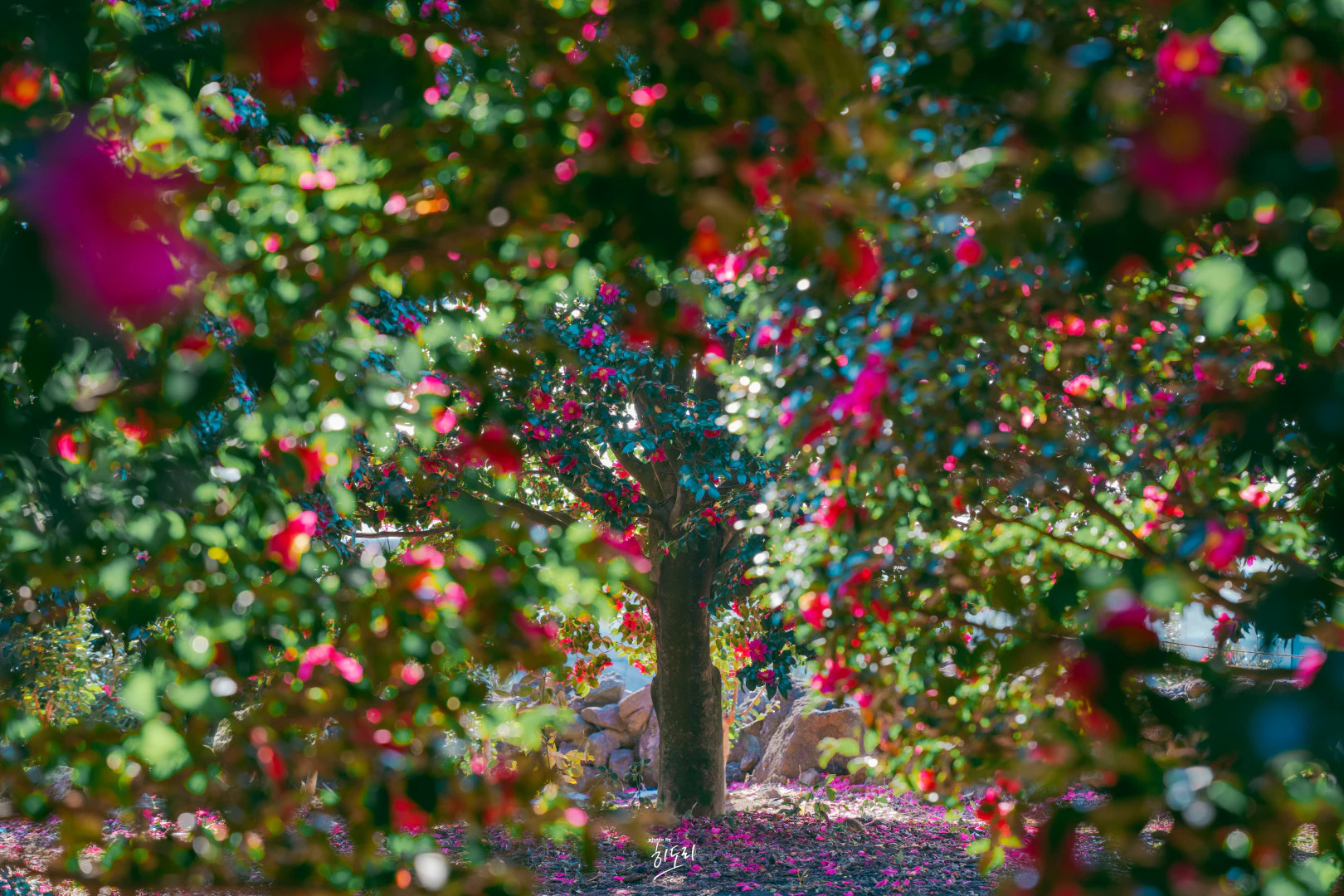
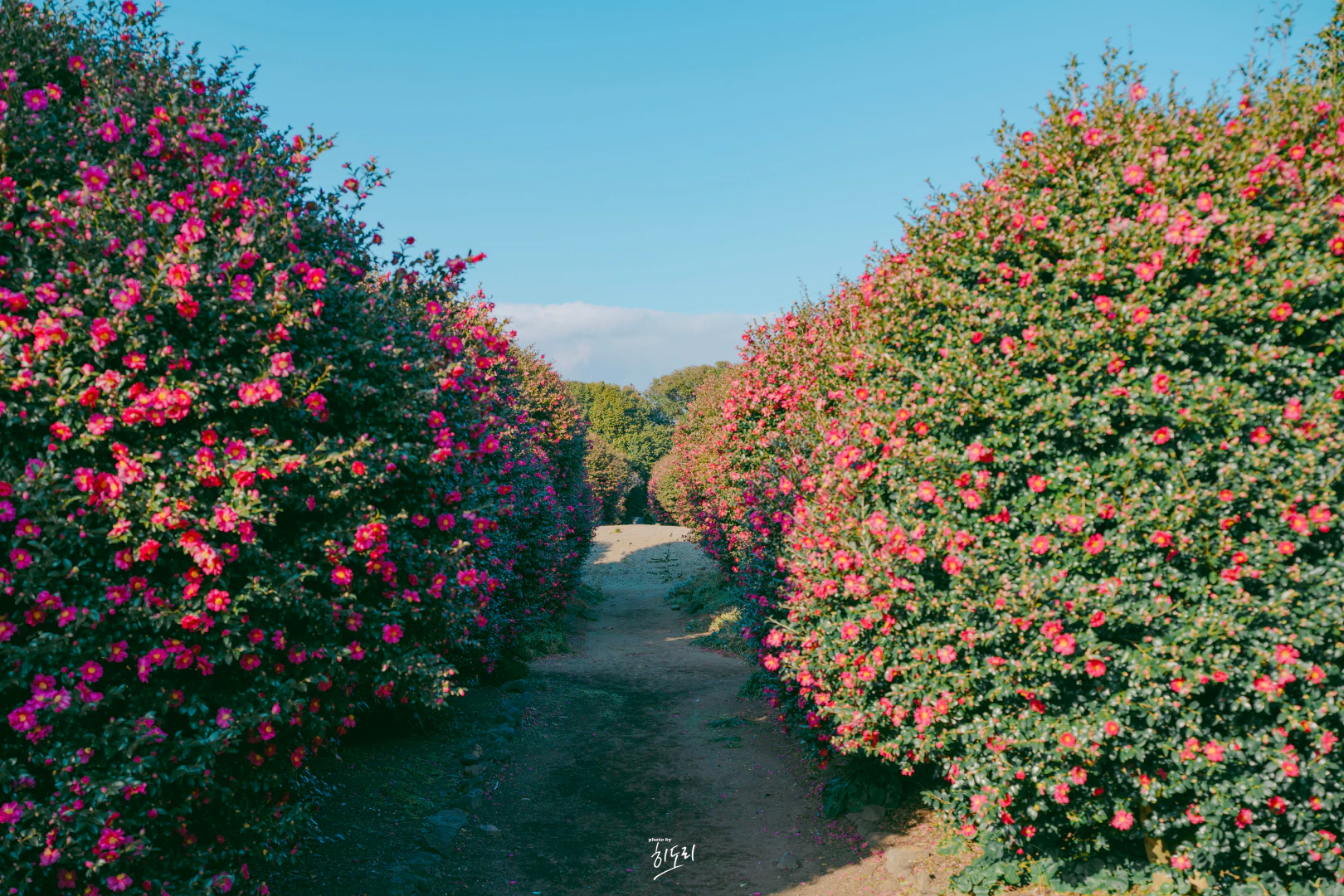
- Chundo / Camellia Island — for its beautiful camellias
- Mokdo (Eye Island) — the official name, from its eye-shaped silhouette
Even today, many elders still say “Chundo” or “Camellia Island” rather than Mokdo.
My grandmother remembers boarding a boat from the Sejuk area long ago. Back then, an “island trip” wasn’t a big journey—it was simply a neighborhood picnic.
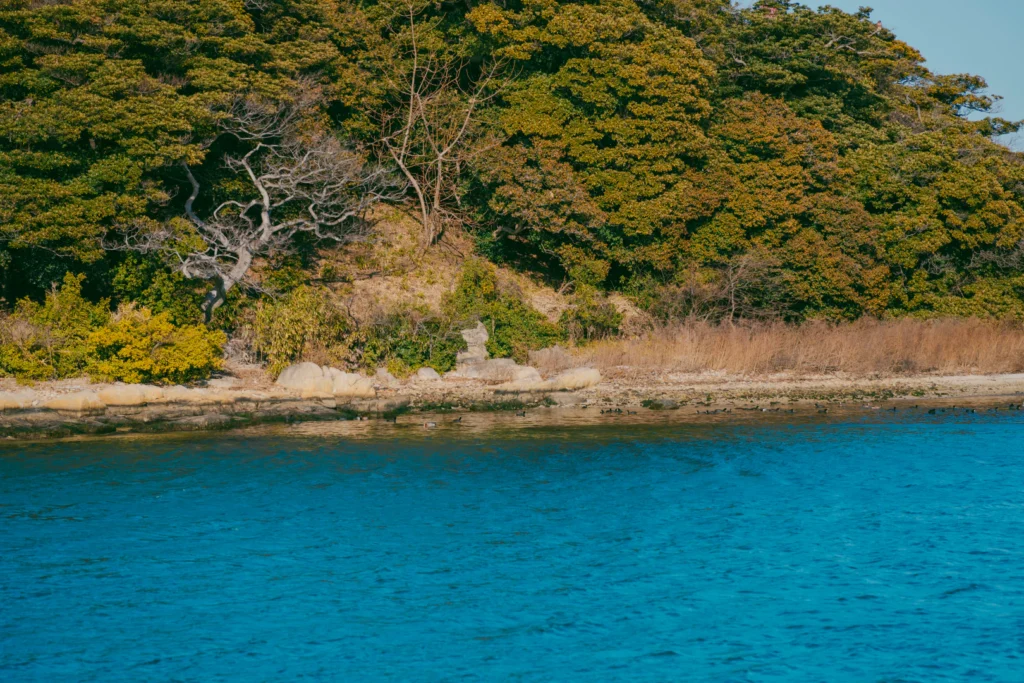
Why Can’t We Enter Mokdo Now?
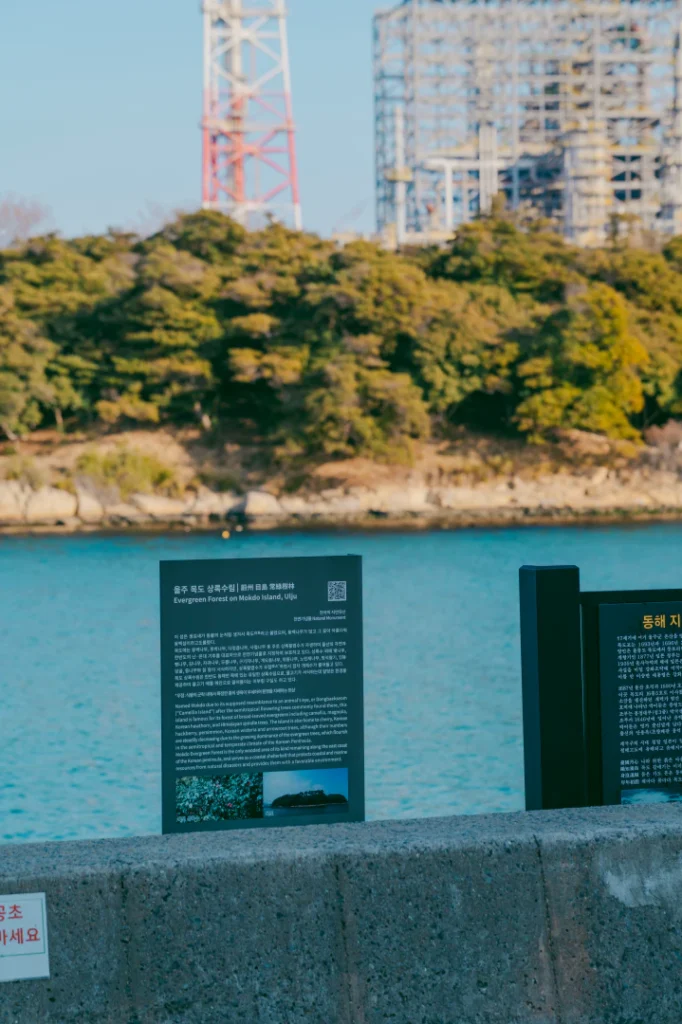
Mokdo isn’t just a pretty island. It’s designated Natural Monument No. 65 — the Mokdo Evergreen Forest, a nationally protected natural heritage site.
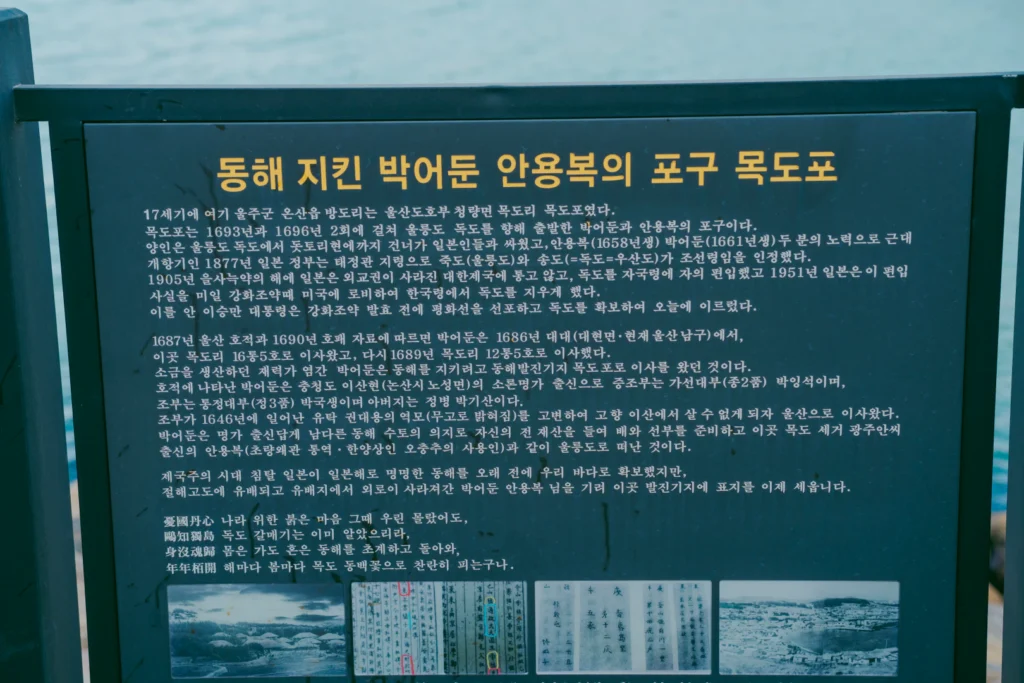
- Once inhabited (there are even stories of a school on the island)
- The only evergreen forest of its kind on Korea’s east coast
- Repeated damage from uncontrolled access
- Environmental concerns after the Onsan National Industrial Complex expanded in the mid-1970s
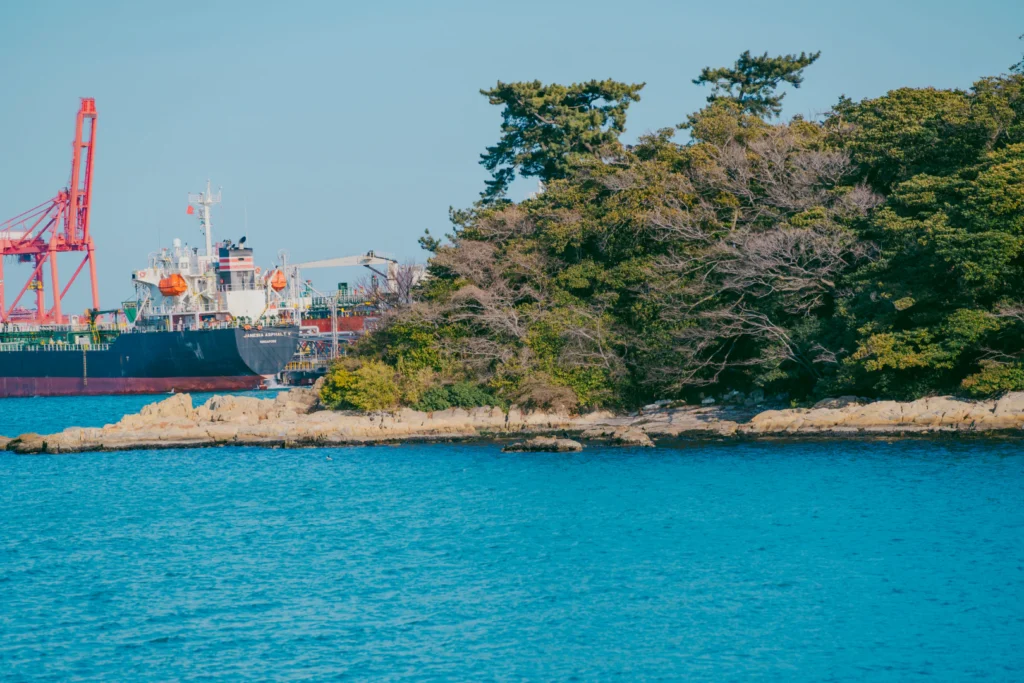
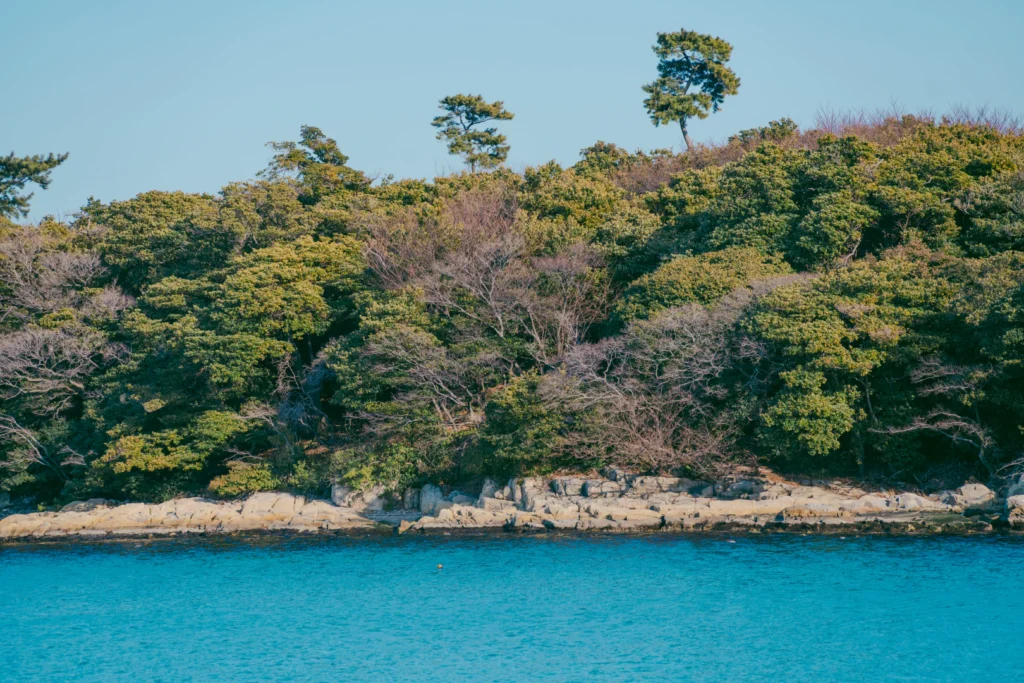
All of this led to resident relocation in 1992 and strict access control.
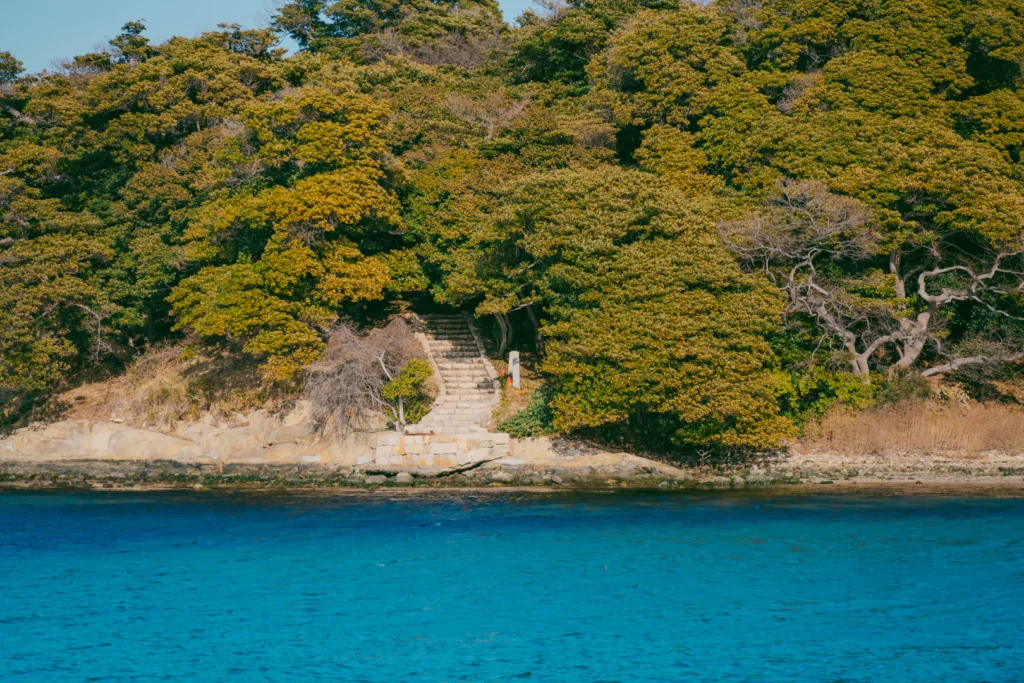
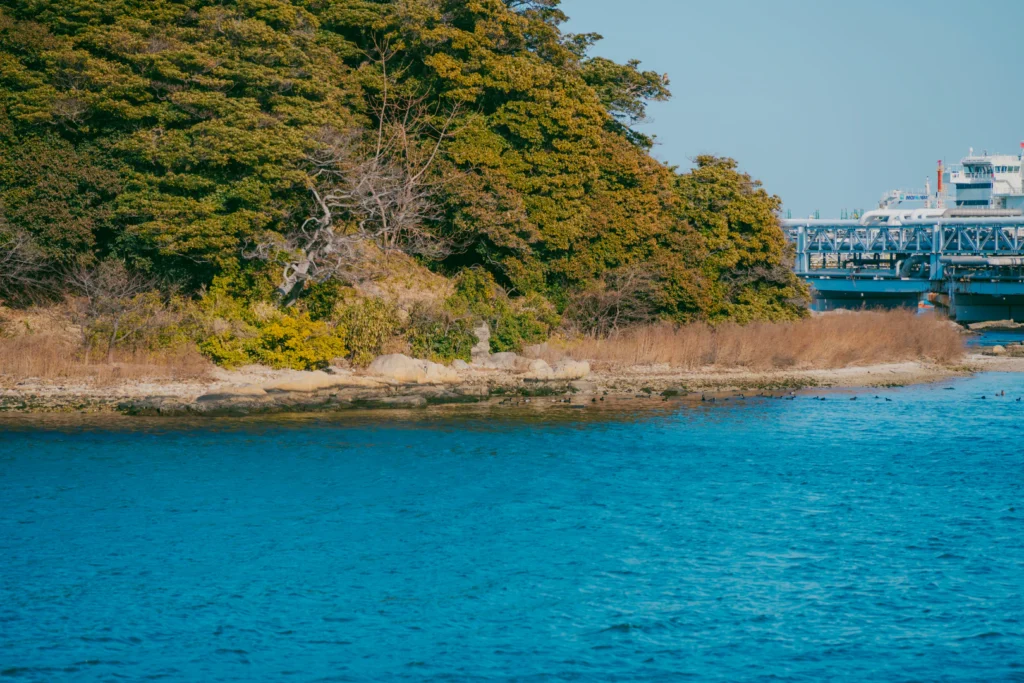
Today, entry is generally prohibited, except for management, research, or conservation purposes.
Preservation vs. Memory — A Complicated Debate
Some argue that Mokdo should reopen as a tourism asset. Others point out a paradox:
after access was restricted, the forest’s condition didn’t necessarily improve.
There are claims that community-based stewardship—like local “Camellia Island Guardians”—was more effective. Recent surveys also show an increase in Machilus trees and a decline in camellias, raising concerns that Mokdo’s iconic symbol is fading.
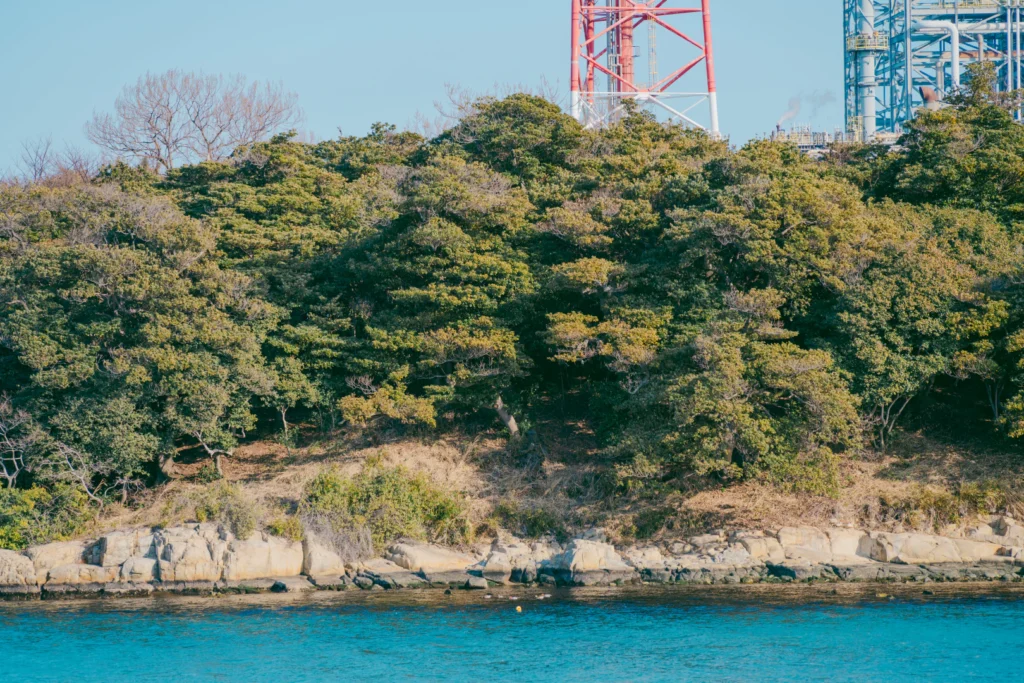
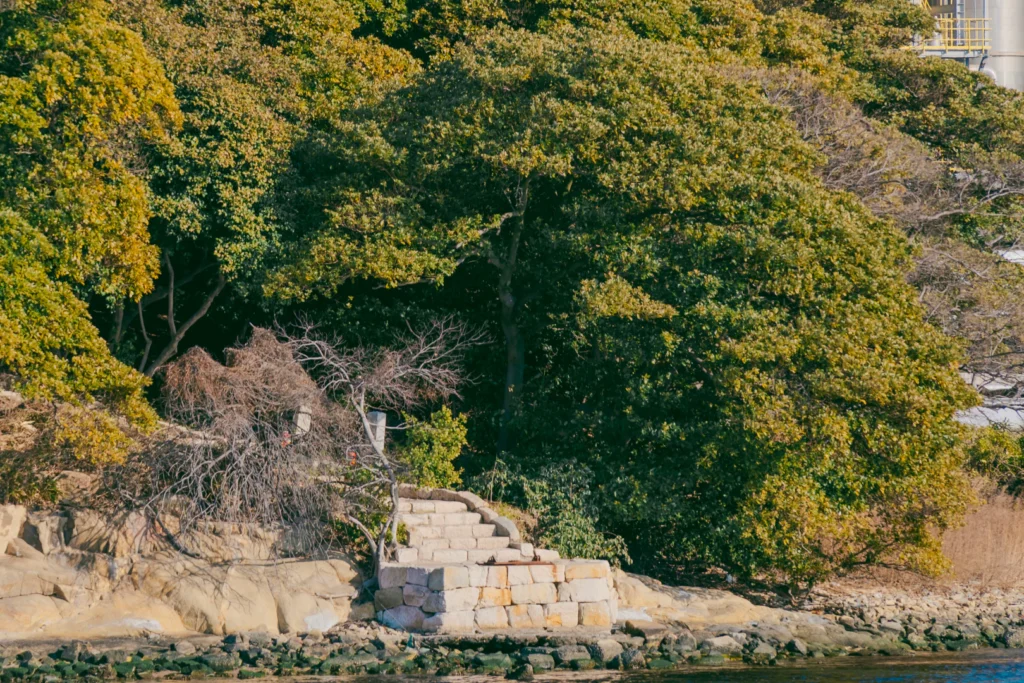
Adding to the worry, on March 23, 2025, a fire of unknown cause damaged part of the island.
It’s hard not to feel uneasy hearing this—“Even if we can’t enter, we hoped it would be well protected.”
Natural heritage, once hurt, takes a very long time to heal.
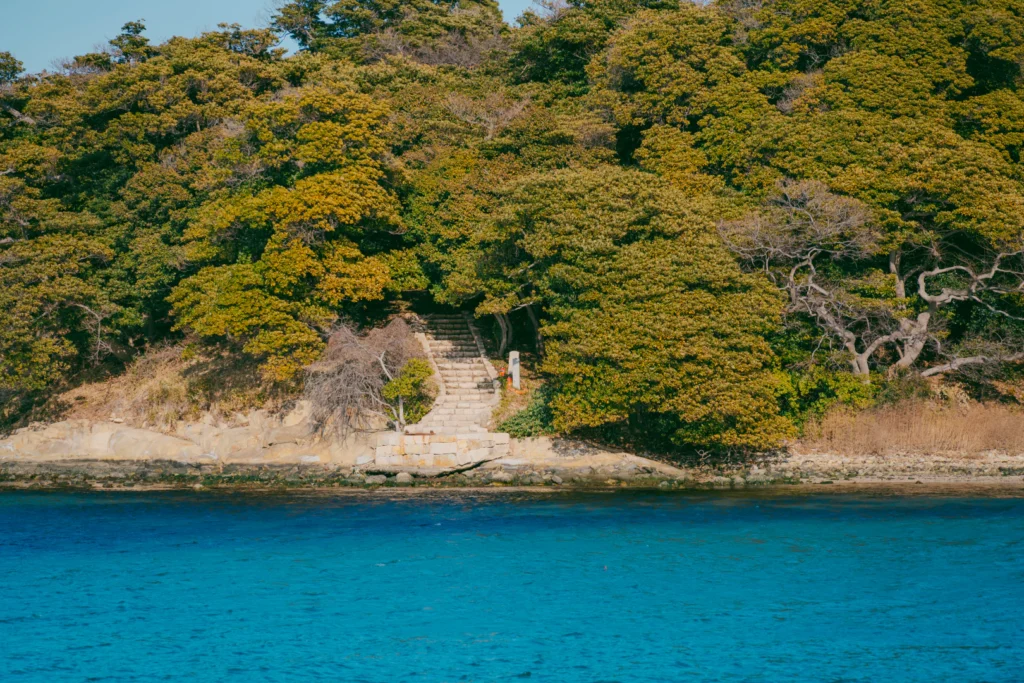
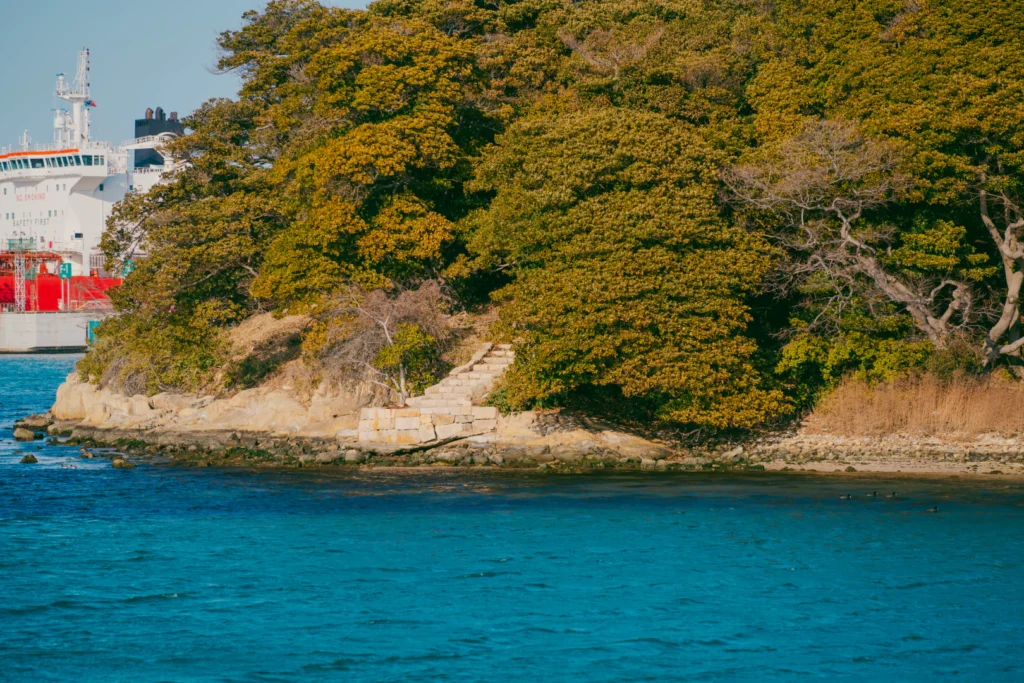
Visiting Mokdo Today: A Viewing Destination
Realistically, Mokdo today is not a landing destination—it’s a viewing destination.
From the Bangdo-ri breakwater and coastal road, the island is clearly visible while passing by.
There are few facilities, so think of it as a place to look at, not step onto.
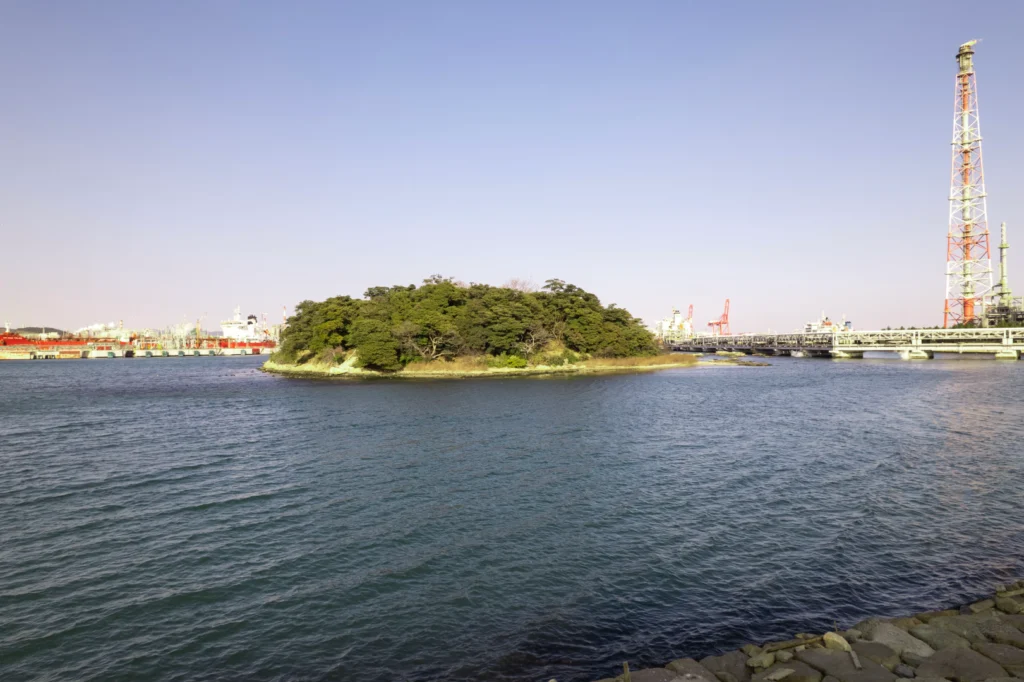
A Quiet Wish
Mokdo holds more memories because it’s now unreachable:
- a spring day holding your mother’s hand,
- a picnic with mussel soup after crossing by boat,
- and now, a question about how we preserve nature without erasing human memory.
Someday—carefully and safely—I hope there’s a way for memory and conservation to stand together.
When the weather warms, take a moment to feel the camellias in spirit, and the cherry blossoms in atmosphere, from afar.
Mokdo Island Ulsan, Chundo Camellia Island, Mokdo Evergreen Forest, Natural Monument 65, Ulju Bangdo-ri island, Ulsan natural heritage, restricted access island Korea, Ulju attractions



답글 남기기