Two Goryeo Dynasty Stone Pagodas Designated as National Treasures of Korea
#KoreanNationalTreasure #GoryeoDynasty #KoreanStonePagoda #KoreanCulturalHeritage #BowonsaTemple #GaesimsaTemple #VisitKorea #KoreanHistory #BuddhistArchitecture
Hello, this is Hidori 😊
If you’re interested in Korean history and cultural heritage, here’s some exciting news worth sharing.
On the 19th, Korea’s National Heritage Administration of Korea officially announced that
the Five-Story Stone Pagoda at Bowonsa Temple Site in Seosan and the
Five-Story Stone Pagoda at Gaesimsa Temple Site in Yecheon
have been newly designated as National Treasures of Korea.
These two pagodas are now recognized as definitive examples of Goryeo Dynasty stone pagodas, clearly illustrating the artistic transition from Unified Silla to Goryeo—making this designation especially meaningful.
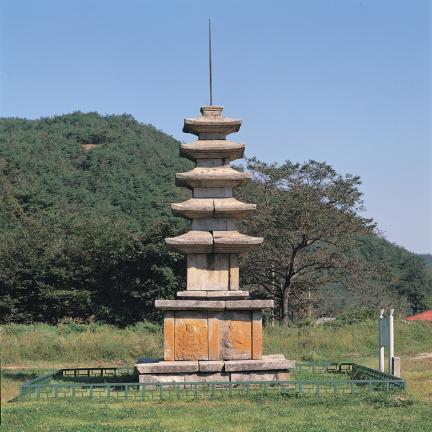
Five-Story Stone Pagoda at Bowonsa Temple Site, Seosan
The Seosan Bowonsa Five-Story Stone Pagoda is a remarkable structure that inherits the sculptural techniques of the late Unified Silla period while clearly showcasing newly emerging features of Goryeo stone pagodas.
Although no exact construction record remains, historical inscriptions on the Bowonsa Beopin Guksa Pagoda Stele indicate that the monk Tanmun (900–974) stayed at Bowonsa Temple and created Buddhist monuments for King Gwangjong of Goryeo.
Based on this, the pagoda is estimated to have been built in the mid-10th century, during King Gwangjong’s reign.
Key architectural features include:
- A two-tiered stylobate in the gagu-style structure
- Realistic lion reliefs carved into the lower base
- Graceful Eight Devas (Palbujung) carvings on the upper base
The roof stones and proportions clearly reflect the new stylistic direction of Goryeo stone pagodas, while the gently diminishing five-story structure creates a stable, harmonious silhouette that feels both elegant and monumental.
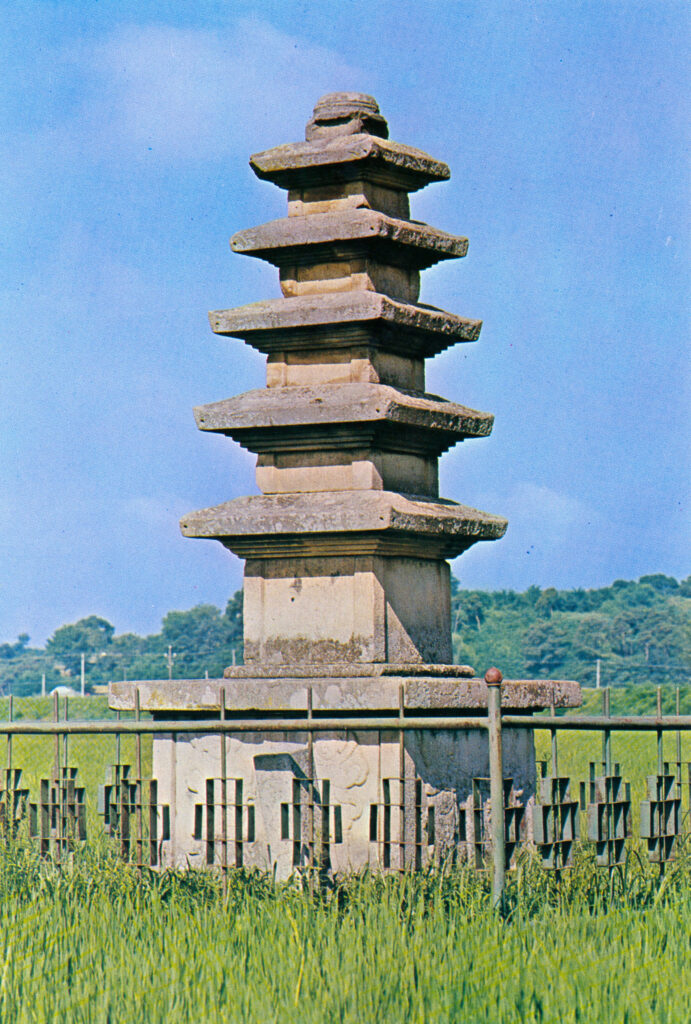
Five-Story Stone Pagoda at Gaesimsa Temple Site, Yecheon
The Yecheon Gaesimsa Five-Story Stone Pagoda stands out for its clearly documented construction year—1011 (the 2nd year of King Hyeonjong of Goryeo).
What makes this pagoda particularly exceptional is its 190-character inscription, which records:
- The exact year of construction
- The purpose behind its creation
- The construction process
- Social and religious conditions of the time
This level of detail is extremely rare, giving the pagoda outstanding academic and historical value.
Its sculptural arrangement is also unique:
- Lower stylobate: Twelve Zodiac Guardian Deities
- Upper stylobate: Eight Devas
- First story of the body: Vajra Guardians
This vertical arrangement symbolically represents Buddhist cosmology, making the pagoda not only architecturally impressive but also deeply philosophical in design. Such a combination of sculptures is rarely seen in other Korean stone pagodas.
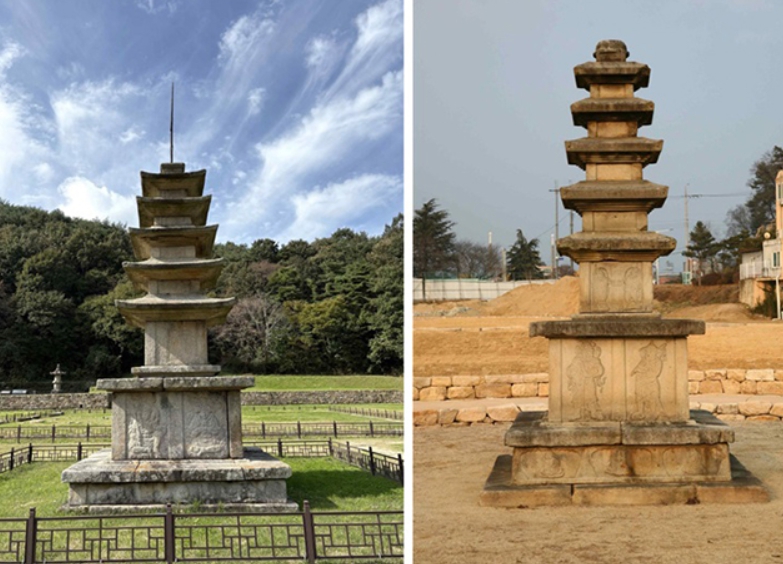
Why These Pagodas Are National Treasures
The reasons for their designation can be summarized clearly:
✔ Benchmark works for establishing the chronology of Goryeo stone pagodas
✔ Clear evidence of stylistic transition from Unified Silla to Goryeo
✔ Exceptional completeness in structure, sculpture, and inscriptions
Together, these pagodas serve as reference standards—the kind that allows scholars to say, “This is what a true Goryeo stone pagoda looks like.”
Future Preservation and Management
The National Heritage Administration has stated that it will continue working closely with local governments and property owners to ensure systematic preservation and professional management of these newly designated National Treasures.
After centuries of standing quietly in their regions, these two pagodas finally feel like they’re receiving the recognition they deserve.
See them in person, and you’ll likely find yourself saying, “Now I understand why they’re National Treasures.”
Goryeo Dynasty stone pagoda, Korean National Treasure, Bowonsa Temple Seosan, Gaesimsa Temple Yecheon, Korean cultural heritage, Buddhist stone pagoda Korea, National Heritage Administration of Korea, Goryeo architecture, Korean Buddhist art